
The future of finance isn't predicted, it's simulated
Most financial models try to answer a familiar question: what’s the most likely outcome?
Synthera asks a different one: what else could happen, and are you ready for it?
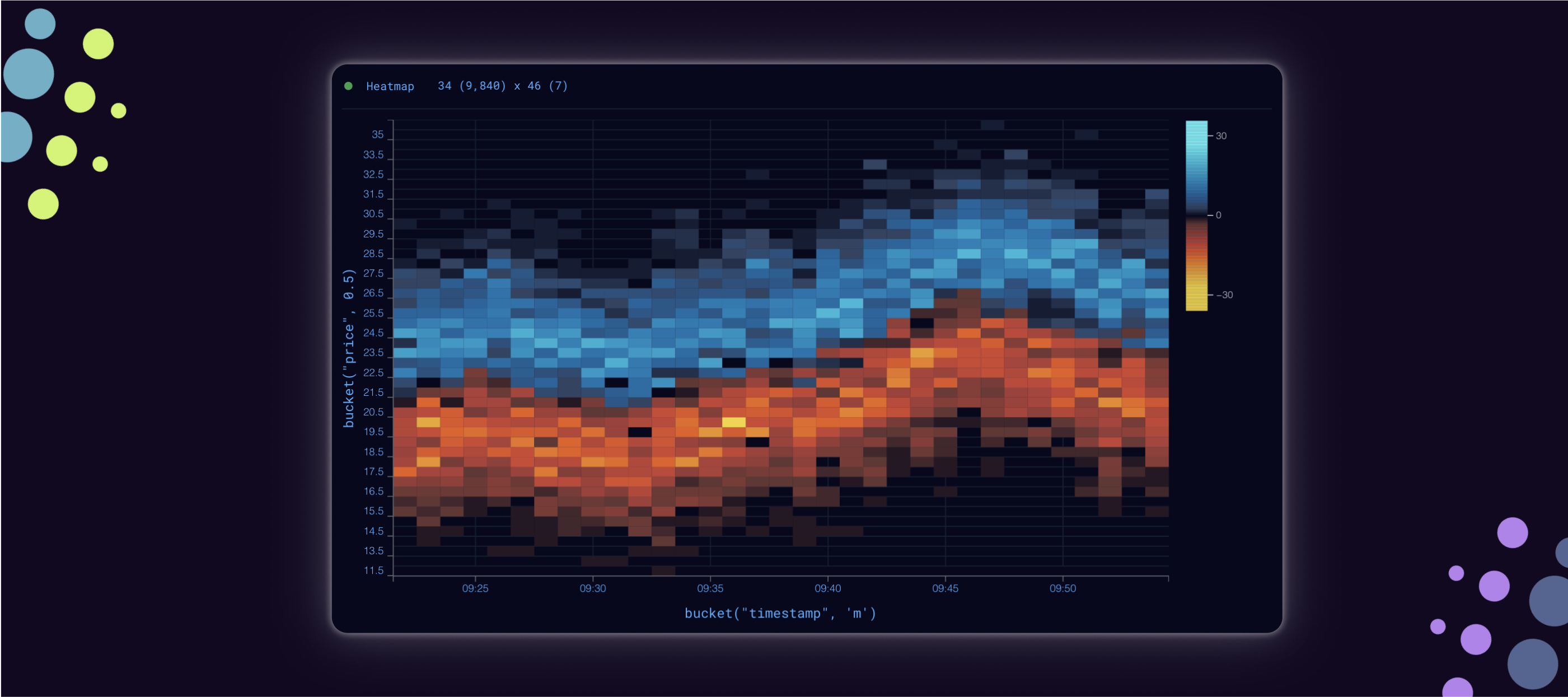
Based in Europe, Synthera is a small startup building generative models for financial time series. Their goal is to simulate realistic market scenarios, from interest rates to stock prices to credit spreads. These synthetic scenarios help banks and asset managers explore risk, test edge cases, and prepare for the unexpected.
“We’re not trying to predict the future,” said Lukas Schreiner, co-founder of Synthera. “We’re trying to model the range of futures that could unfold.”
When the science works, but the tools get in the way
The models worked. The problem was everything around them.
Early on, Synthera prototyped in Google Colab, but it quickly became a bottleneck. It couldn’t scale. It was slow. And it offered no path to production. “Colab was fine at first,” Lukas says. “But eventually, it became too inflexible. You can’t really scale on it.”
They moved to AWS next, but that brought its own set of challenges. Setting up SageMaker, managing environments, and handling deployments all pulled time away from core product development. “I realized I could spend four months just wiring SageMaker together. Or I could build the product.”
They needed GPU access, reproducibility, and a path to production without having to build infrastructure from scratch.
Infrastructure that doesn't get in the way
Synthera discovered Lightning AI almost by accident. But once they tried it, the path forward was clear.
With Lightning, they could provision GPU environments, run their generative simulations, and iterate in hours instead of days. “Compared to AWS, it was night and day. We could just press run and move on.”
They started small, prototyping models and running tests, but quickly went deeper. Lightning gave them an interface to deploy services, track experiments, and tap into AWS and GCP credits without wrestling with infrastructure.
“We even switched clouds, AWS to GCP, in a week. That would’ve been unthinkable before.” said Lukas.
Five months of work back in the bank
The results weren’t just about convenience, they added up to real time and resource savings.
“I had a quick chat with our data engineer,” Lukas says. “They said we saved four to five months of work with the platform.”
For a startup building custom models in a specialized domain, that’s a major acceleration. It meant getting simulations in front of customers faster, iterating more frequently, and doing more with a lean team.
They didn’t need to spin up a dedicated infrastructure team. They didn’t need to spend weeks debugging Dockerfiles or switching between notebooks and production. They could focus on what they were actually trying to build.
“Even after hiring a data engineer, Lightning still saves us time every single week.”
Simulation as a strategy
The biggest shift was not technical. It was strategic. With infrastructure out of the way, Synthera had the freedom to experiment more often, ask better questions, and expand what was possible in financial AI.
They moved from a reactive process to an exploratory one. Not just anticipating risk, but engaging with it. In a world shaped by uncertainty, geopolitics, volatility, and interest rate shocks, that mindset helps their clients prepare, adapt, and make decisions with clarity. “We’re a small team working on a big problem,” Lukas said. “And now we have the space to actually build.”
Synthera isn’t just optimizing pipelines. They’re helping reshape how financial institutions understand risk. With the right tools in place, they’re not just running more simulations, they’re running the right ones. And that clarity, they believe, is what will define the next generation of financial AI.

Read more case studies and blogs:
• Inworld AI Cut Months Off Voice AI Development with Lightning AI
• Infineon Builds a Language Model Small Enough to Run on a Microcontroller in 4 Months
• View all